Have you ever heard the tale of the Eagle diamond? It all began 150 years ago, back in 1876, up on the hill where the Smiley Face water tower sits, when Tom Devereaux started receiving complaints about the well on his property. His tenants, Charles and Clarissa Wood, relied on it for water, but it had stopped working. Determined to fix the issue, Devereaux hired a crew to dig a new well.
In those days, wells w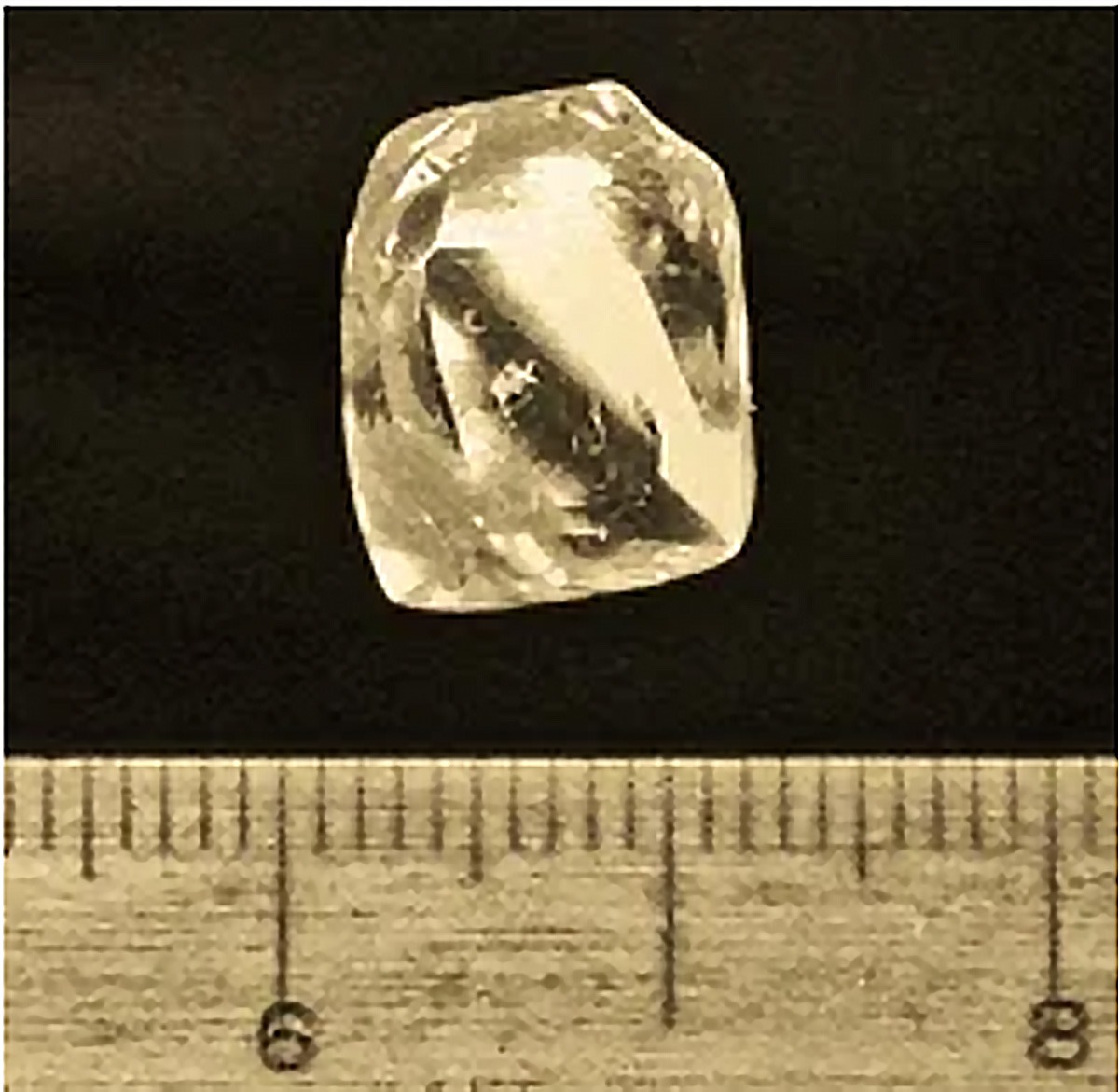 ere dug by hand using shovels and picks. The process was grueling—diggers had to carve out a four-foot-wide hole, first cutting through 25 feet of loose gravel, then four feet of hard clay, followed by six feet of thick yellow mud before finally reaching the water-bearing gravel. That was a lot of digging because it’s about as high as this building! Amid the gravel, the workers unearthed a small, unusual stone. Admiring its beauty, they handed it to Mrs. Wood, who placed it in a small box and promptly forgot about it. Take a look at some samples of stones similar to what was dug up back then.
Seven years later, in 1883, Clarissa Wood visited Boynton’s Jewelry Store in Milwaukee to have a broken pin repaired. While there, she remembered the curious stone she had tucked away and showed it to the jeweler. He studied it closely and agreed with her that it looked like topaz, then offered her a dollar for it. Topaz is a hard stone often cut and polished and then used to make jewelry. Clarissa declined but when asked, mentioned that it had been found in Eagle.
Later that year, struggling financially, she returned to the jewelry store and sold the stone to Mr. Boynton for a dollar. Intrigued, Boynton took the gem to an expert in Chicago, who revealed its true identity—it was a 13-carat diamond of significant value, worth between $700 and $800 at the time. Today, a diamond of that size would be worth thousands.
Determined to find more, Boynton traveled to Eagle, where he purchased the Woods’ former property. He enclosed the land with tall black cloth barriers to prevent onlookers and began an extensive search for additional diamonds. To finance the operation, he gathered investors, and soon, rumors spread like wildfire. Hundreds of speculators flooded into Eagle, eager to buy land in hopes of uncovering riches. The frenzy drove property values to unprecedented heights—some parcels sold for 500 times their original price.
Feeling deceived, Clarissa Wood sued Boynton, arguing that he had deliberately misled her about the stone’s value. Despite multiple attempts, including an appeal to the Wisconsin Supreme Court, she ultimately lost her case.
Meanwhile, Boynton and his investors spent months searching for diamonds. Though they found two smaller ones, they publicly claimed great success, further fueling the excitement. Visitors begged to see the diamonds and Boynton played along, enticing them with dreams of striking it rich. The public became convinced that Eagle was brimming with diamonds, even lobbying to rename the town “Diamond City.”
However, in December 1884, a gem expert arrived in Eagle to examine the diamonds. His verdict was crushing—he said those diamonds were imported from Africa and bore no resemblance to the large Eagle diamond. The truth sent shockwaves through the town as many remembered the scandal a decade earlier when swindlers scattered uncut diamonds and other gems in California.[1] Mining operations abruptly ceased, fences and equipment were dismantled, and Eagle’s diamond fever came to a dramatic end.
But the saga didn’t stop there.
By 1888, Boynton, now financially ruined, sold the Eagle diamond to Tiffany & Co. for $850.[2] Two years later, the famous financier J.P. Morgan acquired the gem along with other rare stones, putting them on display at the American Museum of Natural History in New York.
For decades, the exhibit remained untouched—until 1964, when thieves broke into the museum and stole the entire collection, including the Eagle diamond. Authorities arrested three petty thieves for the crime. They had planned the heist for weeks, studying the security system, a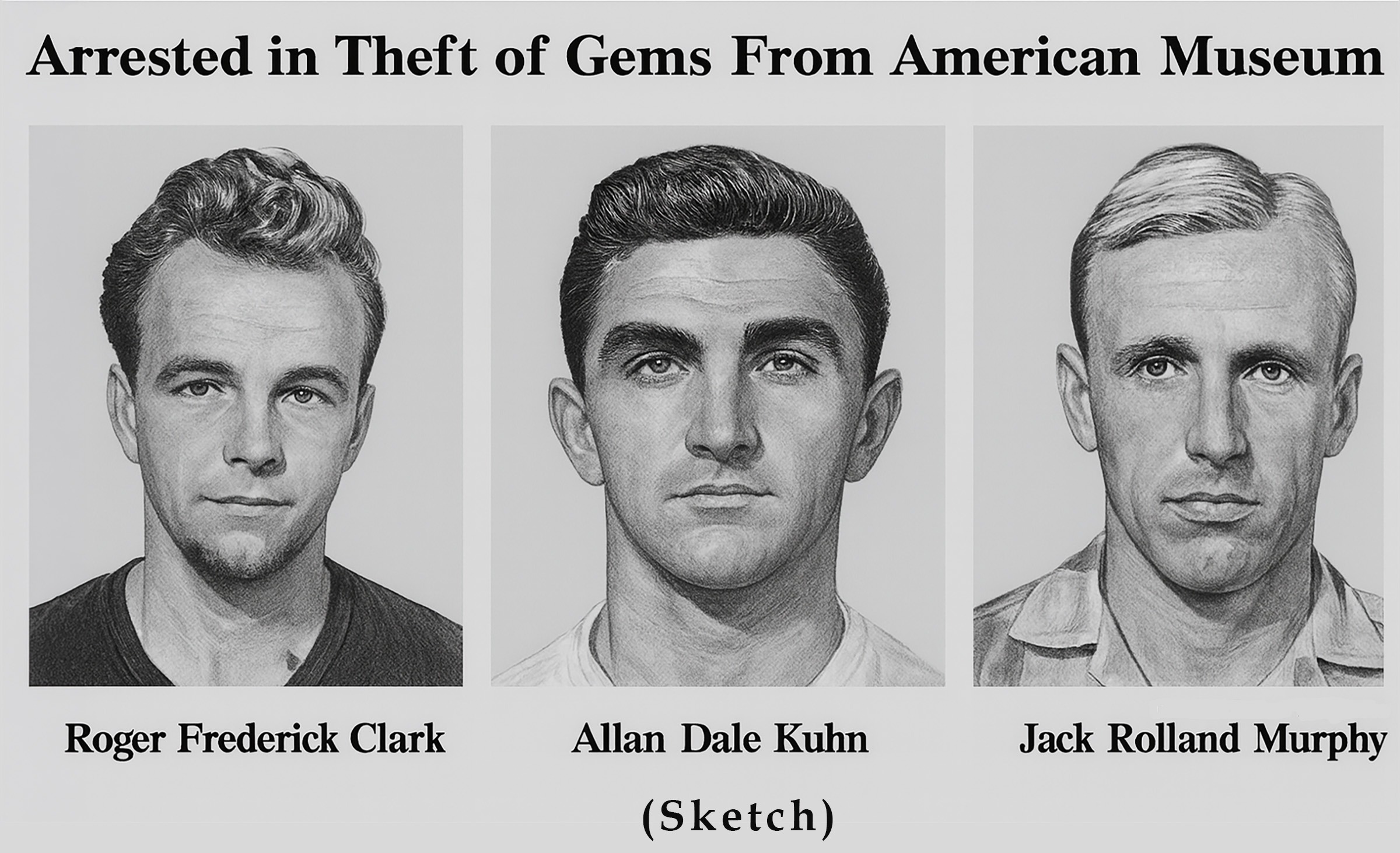 nd even had a practice break-in. They were caught after holding lavish parties which tipped off Police. Now faced with lengthy prison sentences, they agreed to help recover the stolen jewels. Many of the gems were retrieved, but the Eagle diamond was never found. Experts believe it was cut into smaller pieces and sold. The value of the diamond today would be between $5,000-$10,000.[3]
The thieves each received three-year sentences. In 1975, their daring heist was immortalized in the film Murf the Surf, telling the story of one of the culprits, surfing champion Jack Murphy. Today, all three men are gone, their fate sealed in history—just like the lost Eagle diamond.
[1] Great Diamond Hoax – Wikipedia
[2] Vymetal-Taylor, J. &. M. (2013). Treasure In the Gravel – The Story of the Eagle Diamond (p. 27). Eagle Historical Society.
[3] Raw Uncut Diamond Price List: Rough Diamond Prices Guide – Diamond101